

The Next Decade for Synthetic Leather: Four Major Material Trends Reshaping Industry Standards


PURE®, Making Materials More Sustainable
For the past three decades, the defining question for the synthetic leather industry was how to look more like genuine leather. Realism was the sole benchmark.
Today, that question has changed.
Driven by three forces — carbon-neutrality regulations, circular-economy policies and end brands' ESG commitments — synthetic leather is evolving from a low-cost substitute for genuine leather into a new material with value in its own right. It no longer defines itself by leather's benchmarks; it has established dimensions of its own: low-carbon, traceable, recyclable, interactive. For downstream manufacturers, the choice of synthetic leather is no longer merely a trade-off between cost and hand feel — it is a strategic decision that bears on product compliance, brand narrative and supply-chain resilience.
We have mapped the four most certain material trends of the moment, which will together define the industry's next decade.
From Solvent to Water
A Process Revolution Driven by Environmental Regulation
PURE®
Conventional synthetic leather production relies on organic solvents. DMF, methyl ethyl ketone and toluene — pungent chemicals essential for dissolving resins and forming the foam layer — are also the source of VOC emissions and residual solvents in finished goods. The EU's REACH regulation, China's Comprehensive Treatment Plan for Volatile Organic Compounds in Key Industries, and the automotive industry's stringent VDA 270 odour standard are steadily squeezing solvent-based processes into a corner.
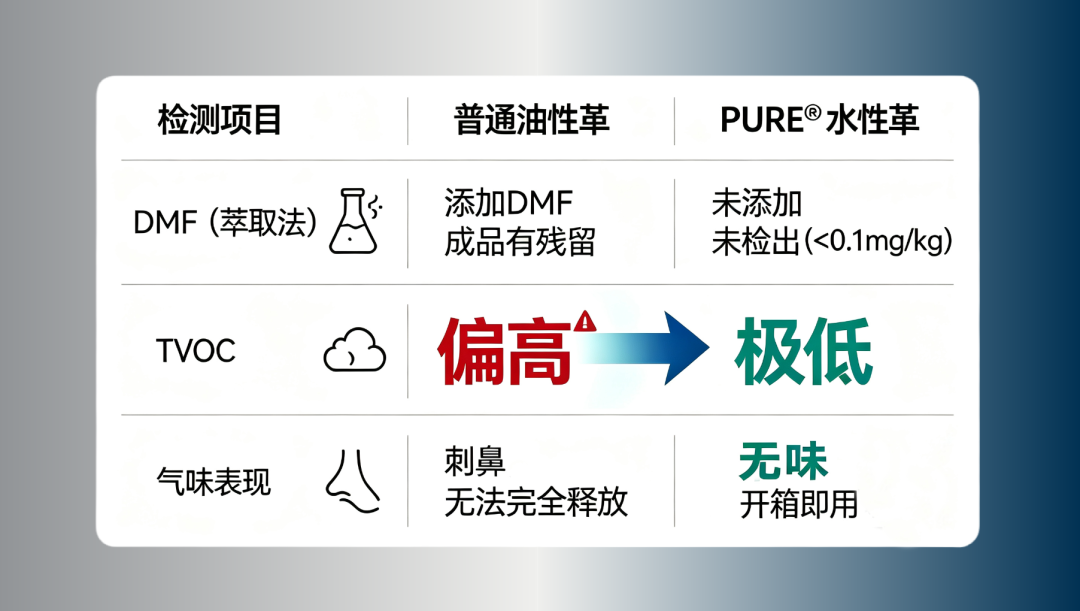
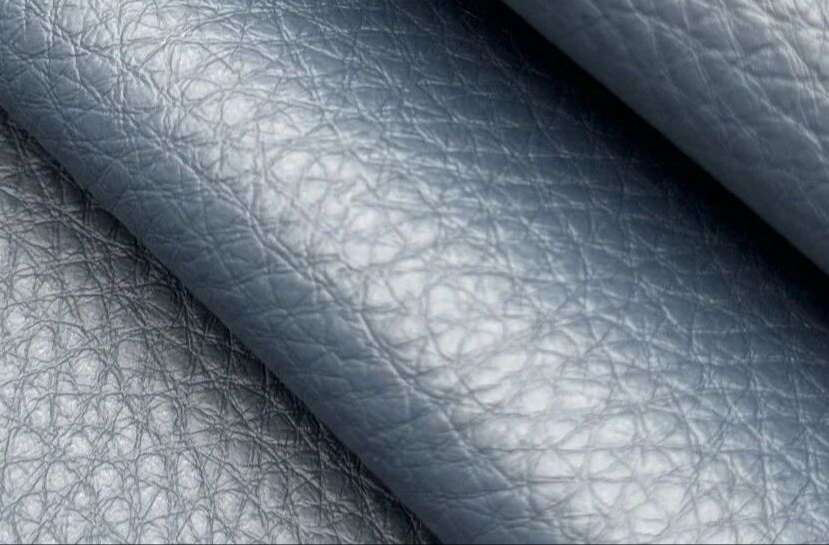
Conventional solvent-based leather vs. PURE® water-based leather

Waterborne polyurethane (WPU) and solvent-free PU have become the mainstream alternatives:
Water-based process Water serves as the dispersion medium, bringing VOC emissions close to zero. Drying, however, is energy-intensive and demands strict temperature and humidity control on the production line.
Solvent-free process A reactive system with 100% solids and no solvent residue, delivering physical performance close to that of conventional solvent-based products. It is currently the mainstream route for high-end automotive interior applications.
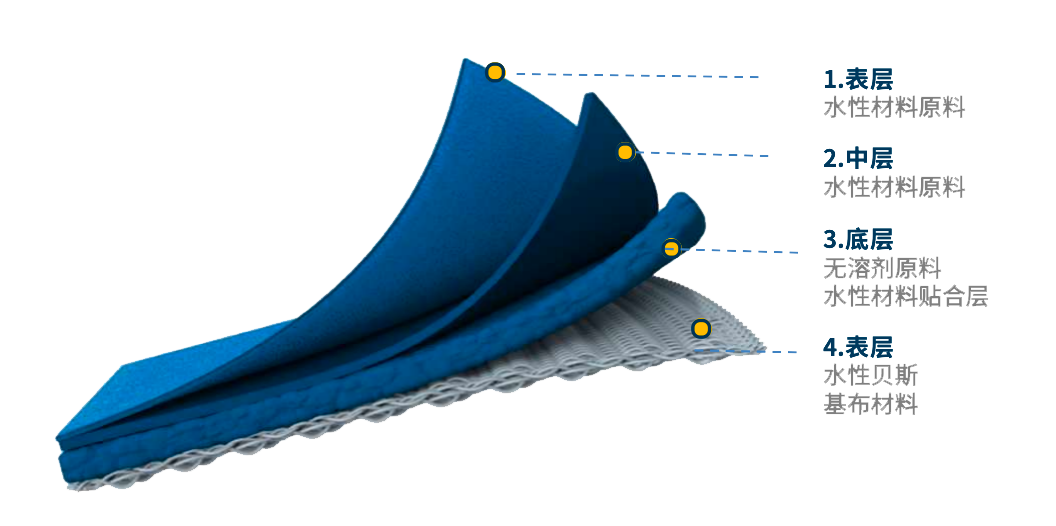
Schematic of water-based synthetic leather structure

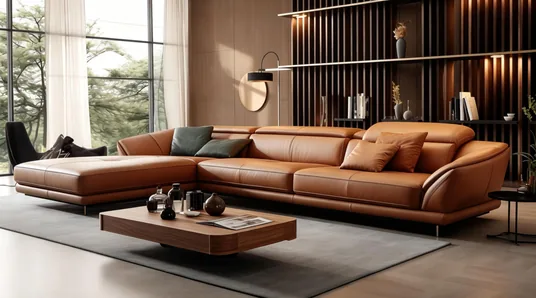
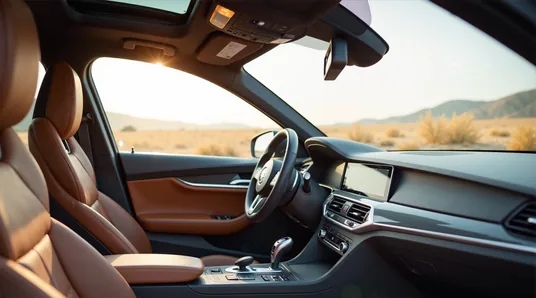
In terms of industry adoption, water-based and solvent-free synthetic leather now accounts for more than 30% of the footwear and furniture segments. In automotive interiors, where VOC and odour requirements are the most stringent, it is becoming a prerequisite for Tier 1 suppliers to OEMs.
Changfeng New Materials was among the earliest movers in this transition. In 2007, prompted by a single order, founder Shao Chenxu set out to work out how to remove DMF from synthetic leather — the source of its odour and a substance harmful to human health.
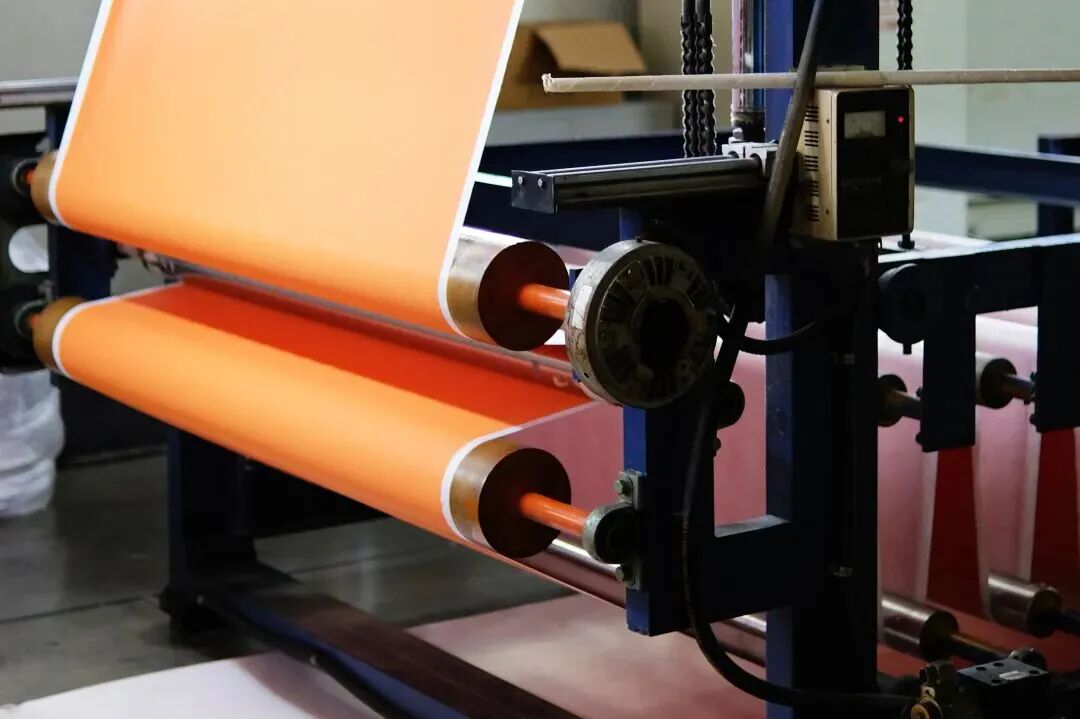
Changfeng's water-based synthetic leather production line

That same year, he began collaborating with academic experts. Starting from semi-water-based formulations, the company achieved mass production of water-based polyurethane synthetic leather in 2010 — a world first that opened a new chapter for the industry. Today, Changfeng is the world's first manufacturer to mass-produce 100% water-based synthetic leather. Its PURE® eco-leather products now serve a broad range of applications, from sofas and car seats to consumer-electronics accessories and fashion goods.
Bio-based Leather
Redefining Where a Material Comes From
PURE®
If water-based technology answers the question of how a material is made, bio-based materials answer the question of where it comes from.
At the heart of bio-based synthetic leather is the replacement of petroleum-based feedstocks with renewable resources. Castor-oil-based polyols, corn-based PTMEG, straw cellulose fillers — biomass drawn from farmland — are becoming the fundamental constituents of synthetic leather.
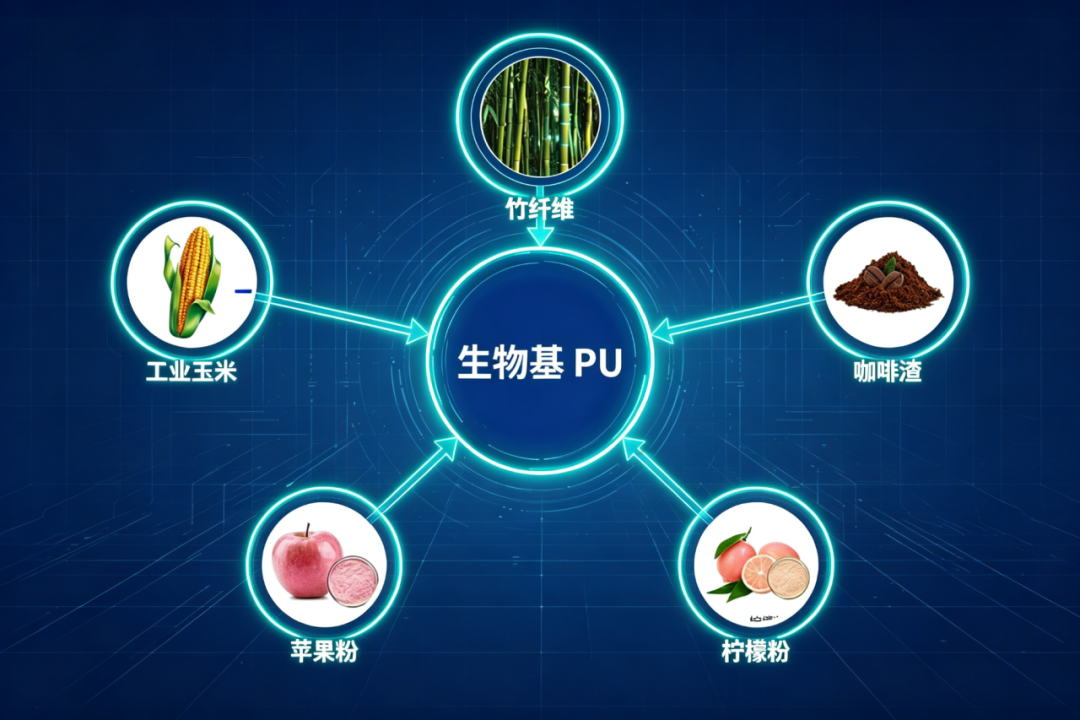
Bio-based materials that do not compete with the food supply

The challenges, however, are just as real: bio-based does not mean biodegradable, nor does it mean low-carbon. Its environmental value depends on a full life-cycle assessment — cultivation, extraction, transport and processing all count towards the carbon account. What end brands need is not conceptual claims but traceable data certified under USDA BioPreferred or DIN CERTCO.
Here, Changfeng's PURE® bio-based series offers a case worth examining. It uses oat husk powder as its feedstock — a by-product of the food industry that would otherwise be discarded or incinerated — and transforms it into a finely textured leather material. The raw material comes from renewable agricultural waste, the production process replaces solvents with water, and the finished product is designed to biodegrade. This dual approach — bio-based plus water-based — turns the circular economy from a slogan into something tangible.
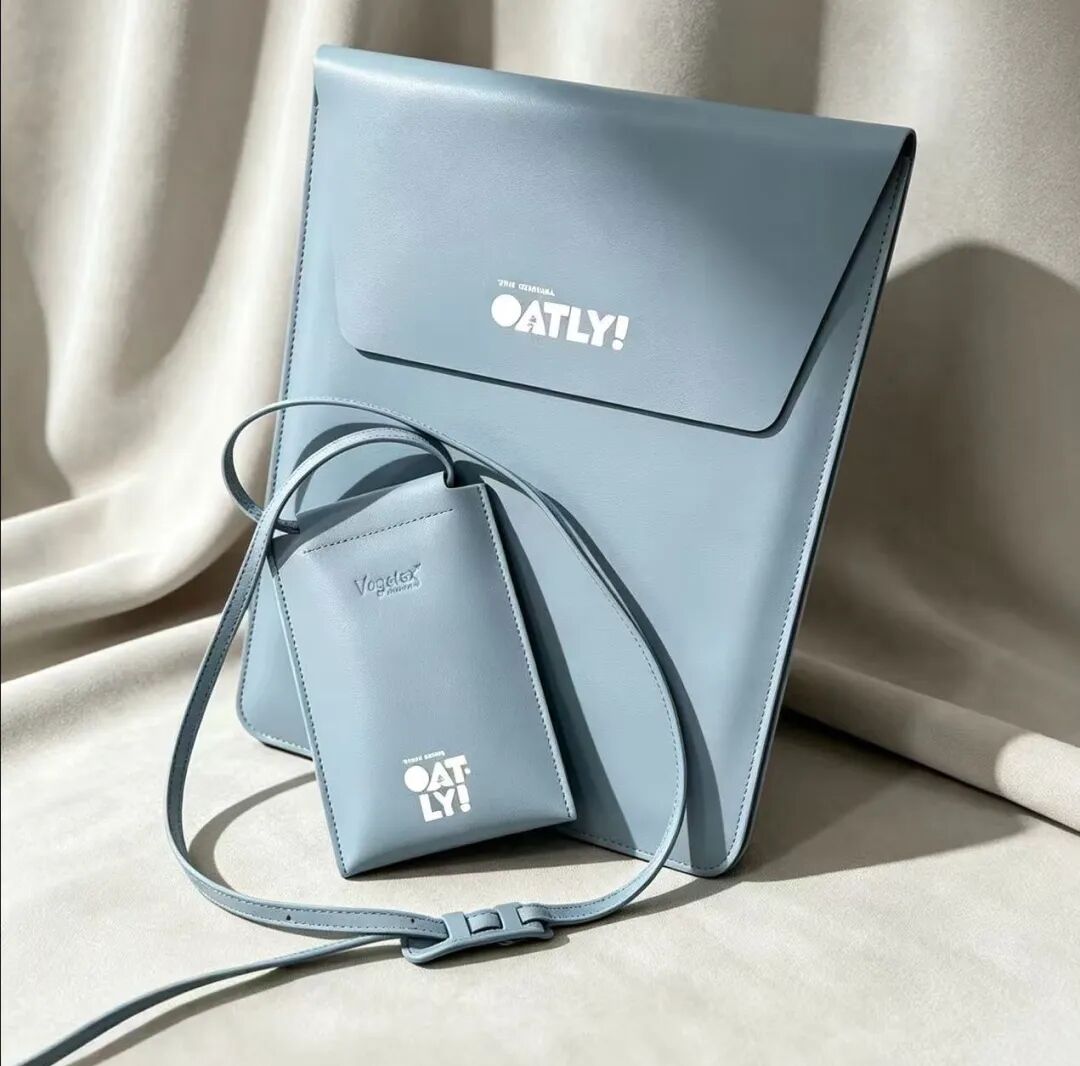
PURE® merchandise created for OATLY using oat husk powder as feedstock

Recyclability and Circularity
From Linear Consumption to a Closed Loop
PURE®
Where does a piece of synthetic leather go once it has been used?
The recycling dilemma for conventional synthetic leather lies in its heterogeneous composite structure: a PET base fabric, a PU foam layer and a surface-treatment layer, each with markedly different physical and chemical properties. Mechanical recycling can only downgrade the material into filler, while chemical depolymerisation is too energy-intensive. In the end, most waste leather goes to incineration or landfill.
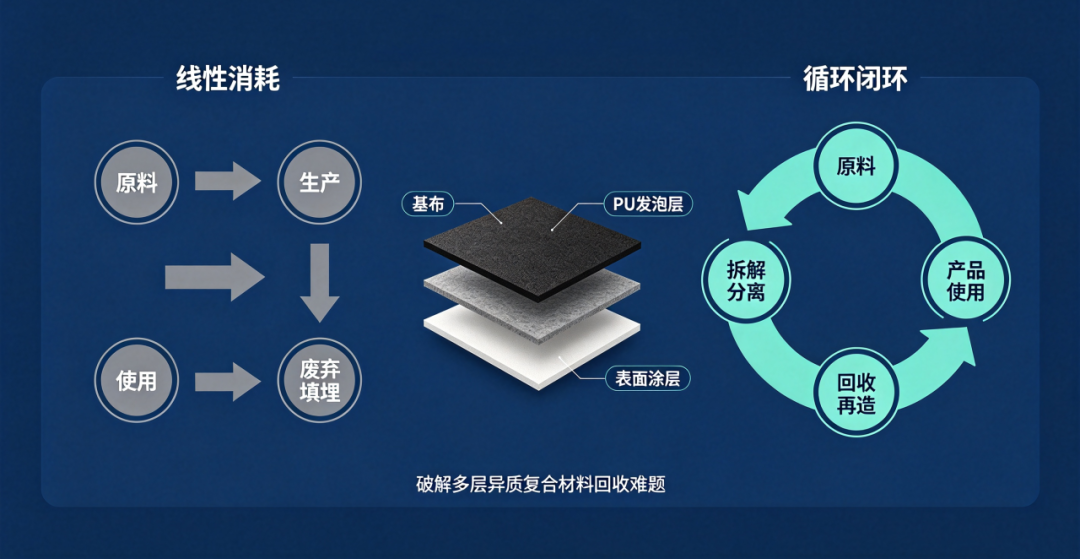
There are three directions in which recyclable synthetic leather is making breakthroughs:
Mono-material thermoplastic design using melt-processable materials such as TPU to enable a physical cycle of melt, form and re-melt.
Peelable structure design allowing the surface layer and the base fabric to be thermally separated at end of life and channelled into their respective recycling streams.
Chemical depolymerisation glycolysis or hydrolysis of cross-linked PU to recover polyols for reuse.
The EU's ELV Directive requires new vehicles to reach an 85% recyclability rate from 2025, and closed-loop recycling of automotive interior materials is shifting from a bonus to a must.
Changfeng's third-generation product line, PURE® LoopTech, is an active exploration of precisely this field. At the same time, in the environmental grading standard that Changfeng helped to develop, bio-based content and recyclability together form the core dimensions for assessing a material's environmental performance.
As this third-stage goal gradually becomes reality, it means the value of a piece of leather no longer depends only on what it is, but also on what it can become once it has been used.
Smart Materials
From Passive Covering to Active Interaction
PURE®
If the first three trends all answer the question of how to be greener, smart materials answer the question of how to be more intelligent.
Smart synthetic leather integrates sensing, response and interaction into a leather-like material, so that it is no longer an inert covering but a surface that can perceive. Current exploration focuses on the following directions:
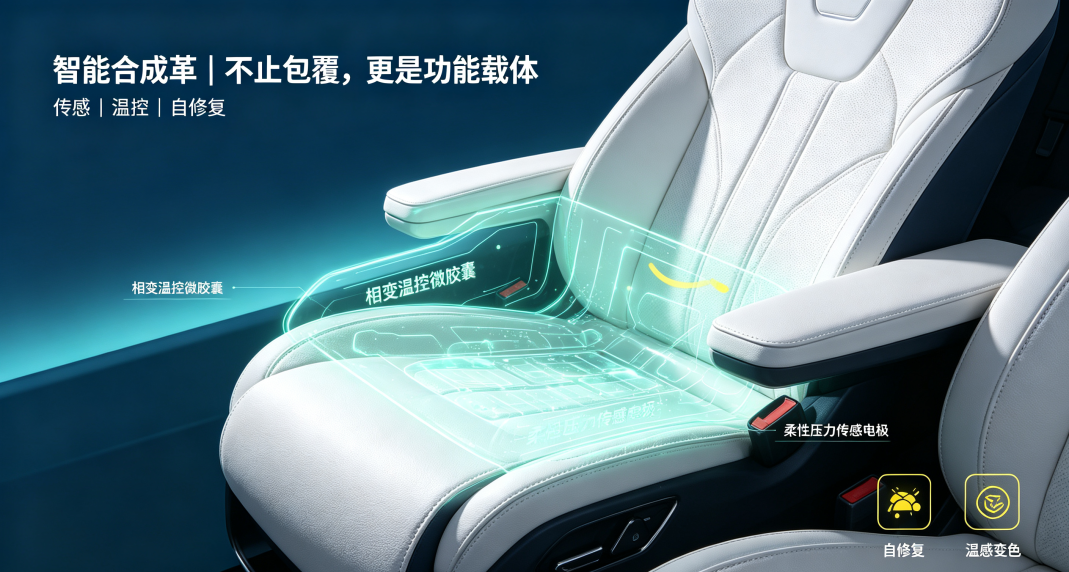
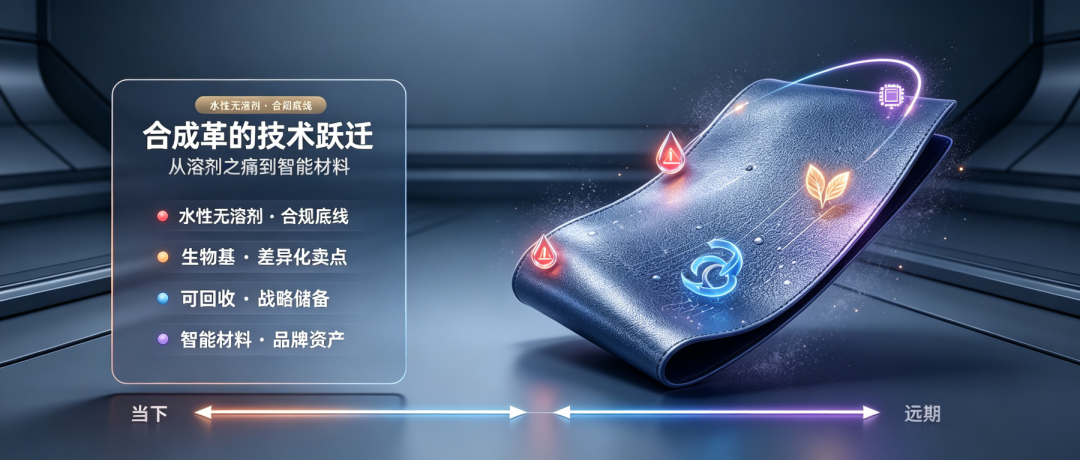
Concept image generated by AI

Temperature-regulating leather phase-change materials are microencapsulated and embedded in the PU coating to deliver active temperature control in seating or apparel; already used in certain high-end car seats and outdoor gear.
Pressure-sensing leather flexible electrodes or conductive fibres embedded in the PU layer support occupant detection in car seats and human-machine interfaces in smart gloves.
Self-healing coatings dynamic covalent bonds (Diels-Alder reactions, disulfide exchange and others) allow surface scratches to heal themselves under heat, extending product life.
Photochromic and thermochromic effects liquid crystals or leuco dyes encapsulated in microcapsules change colour with temperature or light, primarily for fashion and cultural-creative applications.
Notably, Changfeng New Materials has set out its own timeline for this direction. In 2025, the concept of PURE® bionic-touch PU leather was formally introduced — built on a water-based synthetic leather base and integrating flexible sensing, so that the material not only offers the warm hand feel of genuine leather but can also sense pressure and deformation. By 2030, PURE® bionic-touch PU leather is scheduled for mass production, taking smart leather from concept to a commercially scalable product.
Of course, smart synthetic leather will not become ubiquitous overnight in the manner of science fiction. Most work today remains at the sample and pilot stage, yet it is strategically significant: it proves that synthetic leather can possess functional dimensions that genuine leather can never offer.
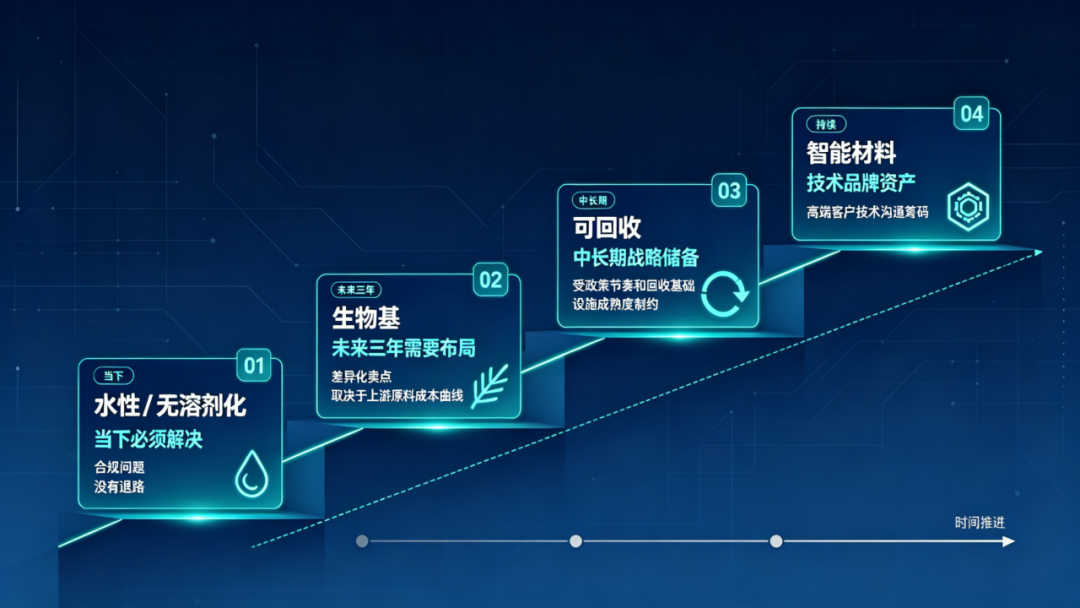
Source material for this article is drawn from public sources; images are AI-generated.
Please contact us for removal if any content is inappropriate.
PURE®
Making Materials More Sustainable