


The Truth About Synthetic Leather Odors: Why Do Some New Cars Have a Strong Smell?



PURE®, Making Materials More Sustainable
Today, almost every new car owner follows the same unspoken "unboxing ritual"—peel off the protective film, leave the car out in the sun, open the windows to air it out, toss in bags of activated charcoal, spritz formaldehyde-removal sprays, fire up the cabin air purifier. We have quietly accepted that a new purchase "should smell a certain way", and then we bury that smell under a flurry of after-the-fact fixes. We've even come to treat the standard advice of "air the car out thoroughly before driving" as ordinary, and to shrug off "three weeks of ventilation and still a hint of smell" as a perfectly normal cost of ownership.
But this routine is itself a compromise. We compromise on one assumption: that the smell was supposed to be there in the first place.But what if it was never supposed to appear at all?
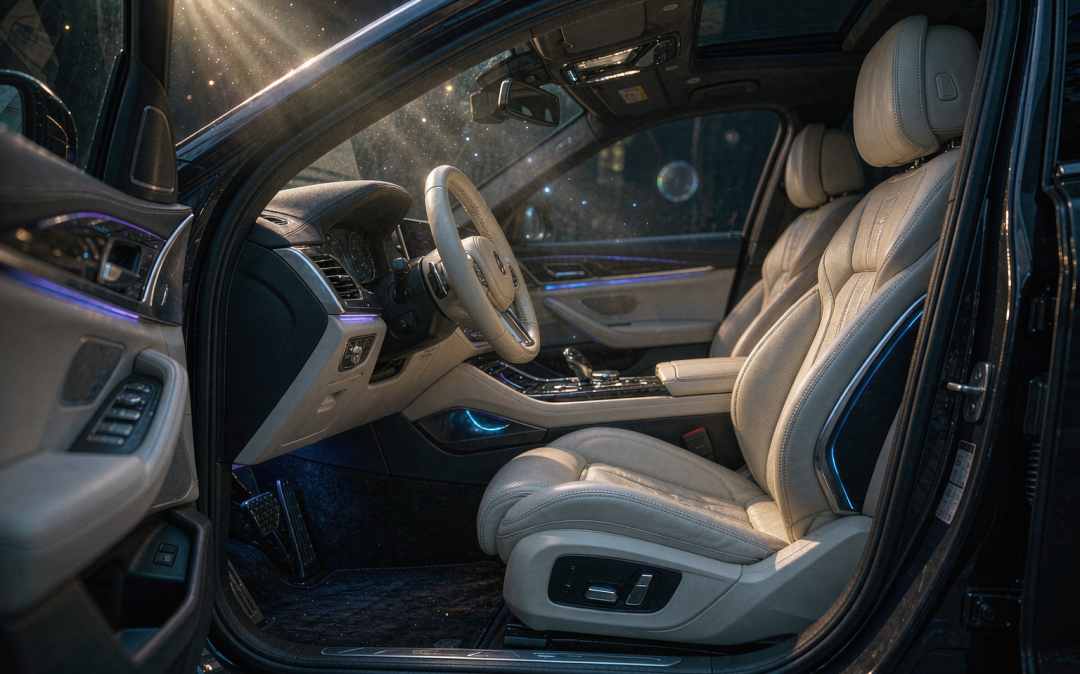
Before we answer that, we need to start with a more basic question:What exactly is that “new” smell you’re noticing?Today, let’s peel the layers back, one by one.
The Smell Isn’t “Fragrance”—It’s VOC
PURE®
Your nose does not lie—but it is often misunderstood.
So-called “new-car smell” is, at its core, the name of a class of substances—Volatile Organic Compounds(Volatile Organic Compounds, VOC for short). They are gas molecules slowly released into the air from leather, synthetic leather, plastics, adhesives, coatings, plasticisers, flame retardants, inks and acoustic cotton during production and use. Given enough warmth and air movement, they keep on “seeping” out of the material almost indefinitely. This is also why a car left baking in the summer sun smells several times stronger than the same car in winter—heat activates the molecules.
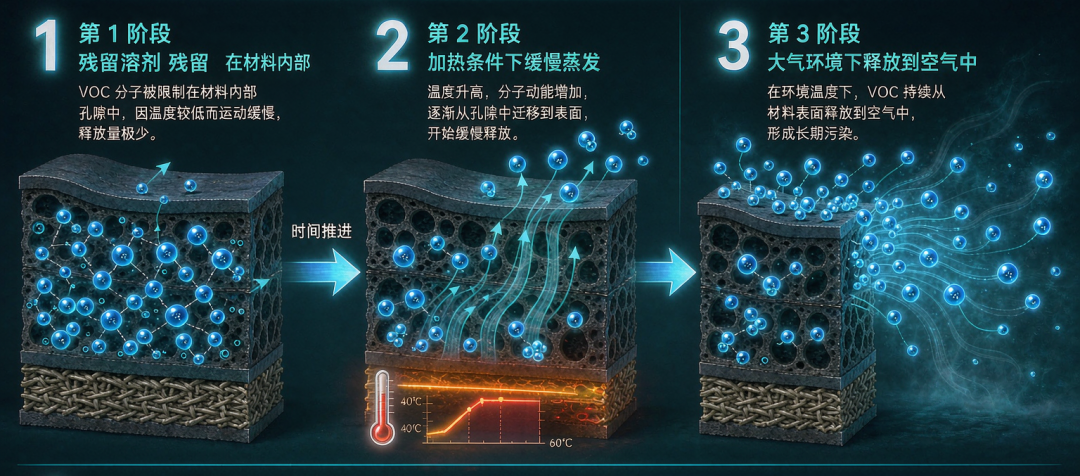
How VOCs migrate from leather into the air

Behind that scent hides a string of names most people have never had to learn:formaldehyde, the BTEX group, aldehydes and ketones, and one term the synthetic-leather industry cannot avoid—DMF(dimethylformamide).
DMF has long been called the “master key” of synthetic-leather production. On a traditional release-paper coating line, it plays three roles at once: it fully dissolves the polyurethane resin, it keeps the slurry flowing evenly, and it allows a smooth, uniform film to form—without it, PU resin can barely be cast into an even skin. The trade-off is that DMF remains trapped inside the material, and as temperature rises and time passes, it keeps slowly evaporating—that sharp, lingering smell is, to a large extent, the smell of DMF.
So the truth is:the “newness” you smell is less a badge of freshness than a failing grade stamped on the product at the factory.
Where Does “New-Car Smell” Actually Come From?
PURE®
Knowing “what” it is, the next question is naturally “why”.
The source is no mystery—every “new-car smell” comes from engineering compromises that have not yet fully run their course within the product. There are three layers to it:
First, the chemistry of the material itself.Polyurethane, synthetic leather, plastics, adhesives—their molecules are not “solid” knots but long chains, with vast numbers of unreacted small molecules, residual solvent, and incompletely cured monomers hiding between the chains. These small molecules are born to “squeeze” their way out, drift into the air and be picked up by your nose. This is the fundamental source of the “new-car smell”.
Second, the catalyst of temperature.A car parked in the sun smelling stronger is not an illusion—for every 10 °C rise in temperature, the rate of VOC emission nearly doubles. That is why a car after a summer bake-out smells far stronger than the same car in winter, and a closed cabin smells many times more intense than one with the windows cracked.

VOC emission process: every 10 °C rise nearly doubles the release rate

Third, the difference in manufacturing process.The conventional solvent-based “release-paper” process uses DMF as its carrier solvent—the same DMF that plays the dissolving, flowing and film-forming roles all at once. After the process is done, DMF stays trapped inside the material and slowly outgases over time. Genuine leather follows the same logic: it goes through more than a dozen steps—liming, degreasing, tanning, splitting, dyeing, finishing, embossing—each one adding another chemical into the mix: tannins, chrome salts, acrylic resins, PU finishes, solvent-based adhesives. The so-called “leather smell” is the ensemble of dozens of substances volatilising together at room temperature.
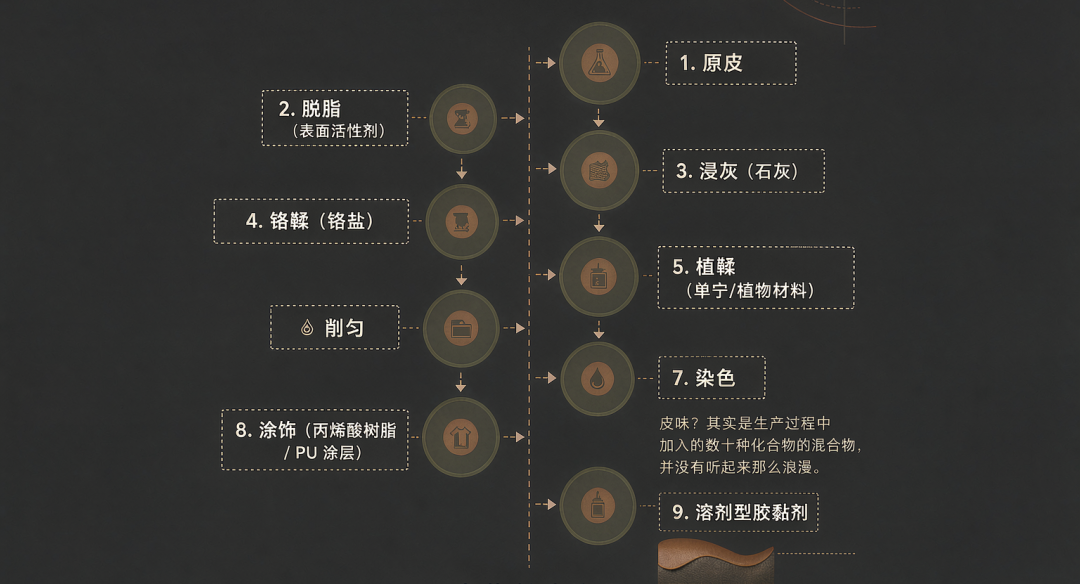
Schematic of the leather-making process

So “new-car smell” is not a feeling; it is an engineering reality.It is the product of material, temperature and process layered together, the final expression of compromises that have accumulated over decades of industry development. For human health in particular,many of the compounds behind that “new smell” have already been placed on priority control lists by the World Health Organization. Formaldehyde is a Group 1 carcinogen; the BTEX group is strongly associated with blood disorders; long-term inhalation can even affect the central nervous system, liver and kidneys.
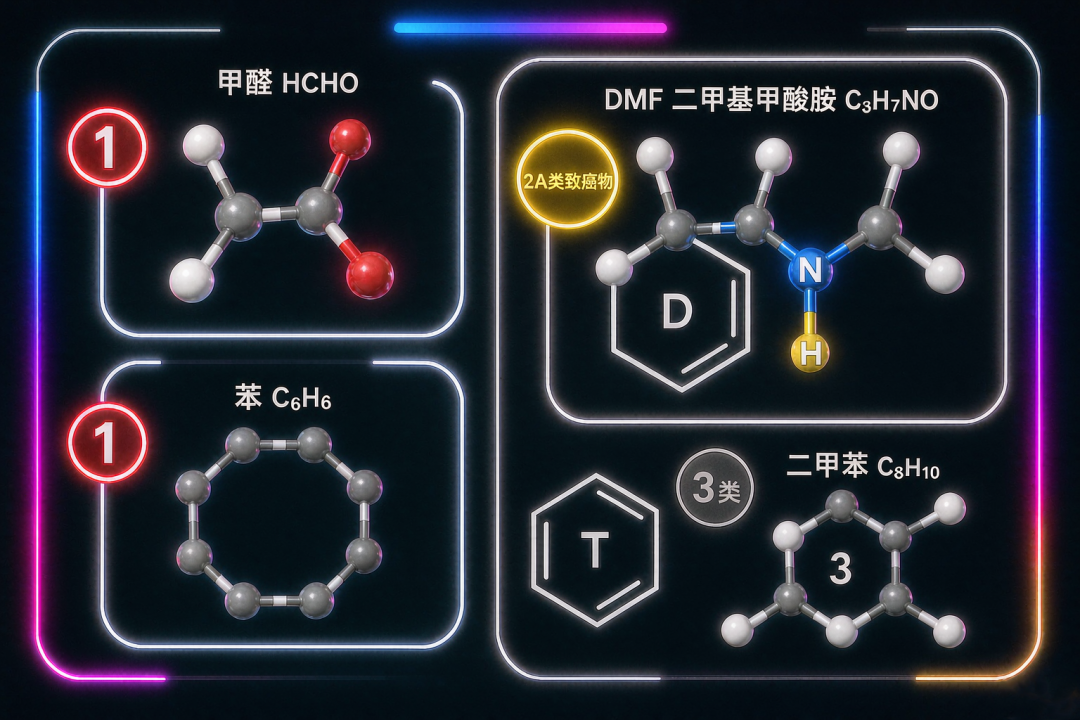
Main components of VOCs

Which raises the next question: between “a trace of residue” and “zero residue”, how exactly is the line measured?
Smell Is a Quality That Can Be Quantified
PURE®
In materials science, smell is never mysticism—it is a hard metric that can be quantified, measured and managed.
In the lab, an odour grade is usually assigned by a trained sensory panel assessing the samples; this is paired with instrument-based metrics such as gas chromatography-mass spectrometry (GC-MS), TVOC calculation, and chamber tests for formaldehyde, locking down both “what the nose feels” and “what the instrument reads” at the same time. A complete low-VOC test report typically lists dozens of data points—benzene, toluene, xylene, ethylbenzene, styrene, formaldehyde, acetaldehyde, TVOC, and many more. The industry grades materials with an odour level(usually expressed on a 1–5 scale)“scoring” them, and at the same time pairs this with VOC emission, total TVOC and formaldehyde release data to give an objective assessment of a material’s “cleanliness”. This means that“having no smell” is no longer a subjective adjective; it is a verifiable technical specification.
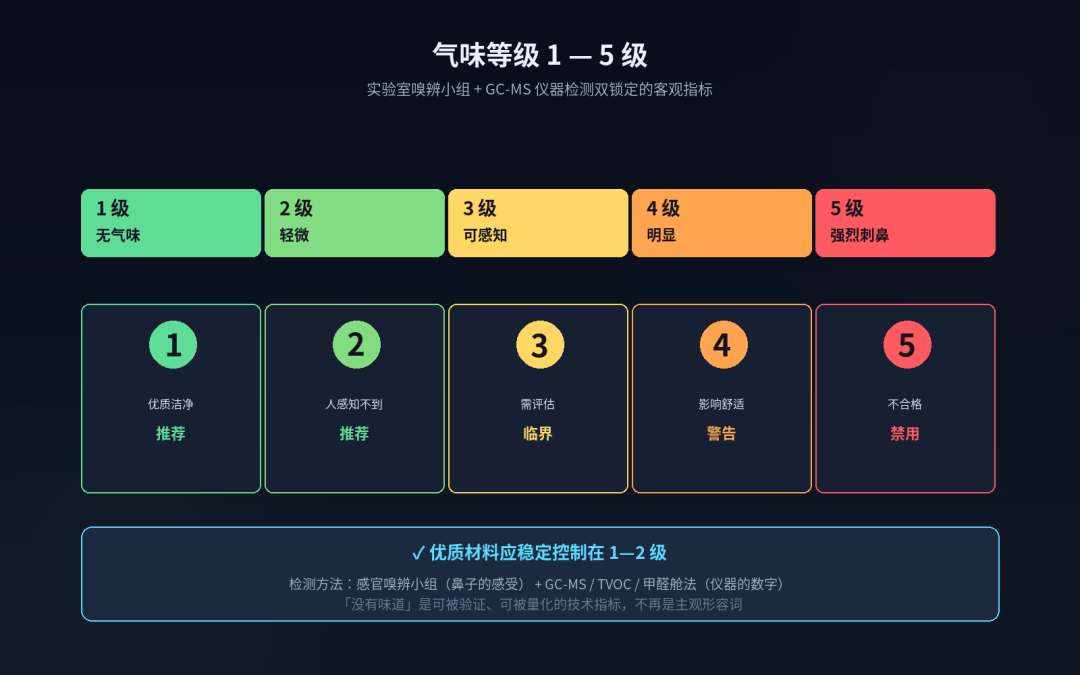
Odour grade scale

Going further, in 2025 China’s synthetic-leather sector established a graded certification system for harmful-substance emissions, formally writing “low odour, low VOC” into the standard—turning “eco-friendly” from a slogan into a traceable, gradable, comparable quality benchmark. Behind this lies a quiet awakening of consumer awareness, and the hard demands that downstream sectors—home furnishing, automotive, consumer electronics, fashion accessories—now place on the cleanliness of their supply chain. A series of regulatory red lines—EU REACH, child-product safety standards, in-vehicle air-quality guidelines—is turning “low VOC” from a nice-to-have into a ticket to enter the market.
When “clean” becomes the standard, competition in materials finally returns to the technology track.
Changfeng New Materials’ Answer: Water as the Source
PURE®
Is it difficult to take the smell out of the material?
Yes. Because smell is not a surface issue; it is a formulation issue, a process issue—a gene the material carries from the moment it is born.
Since VOCs and DMF come from organic solvents, the truly effective response is not to mask them with fragrance or dilute them through post-treatment—it is to swap them out at the source.
Changfeng New Materials chose a long, hard and uncompromising path:water as the source, replacing conventional solvent-based systems with water-based ones: disperse PU particles in water, so that film formation shifts from “solvent cast film” to “water-evaporation cast film”. It sounds like a simple change of carrier, but behind it lies a decade of repeated re-engineering of resin architecture, emulsification, rheology and drying curves.
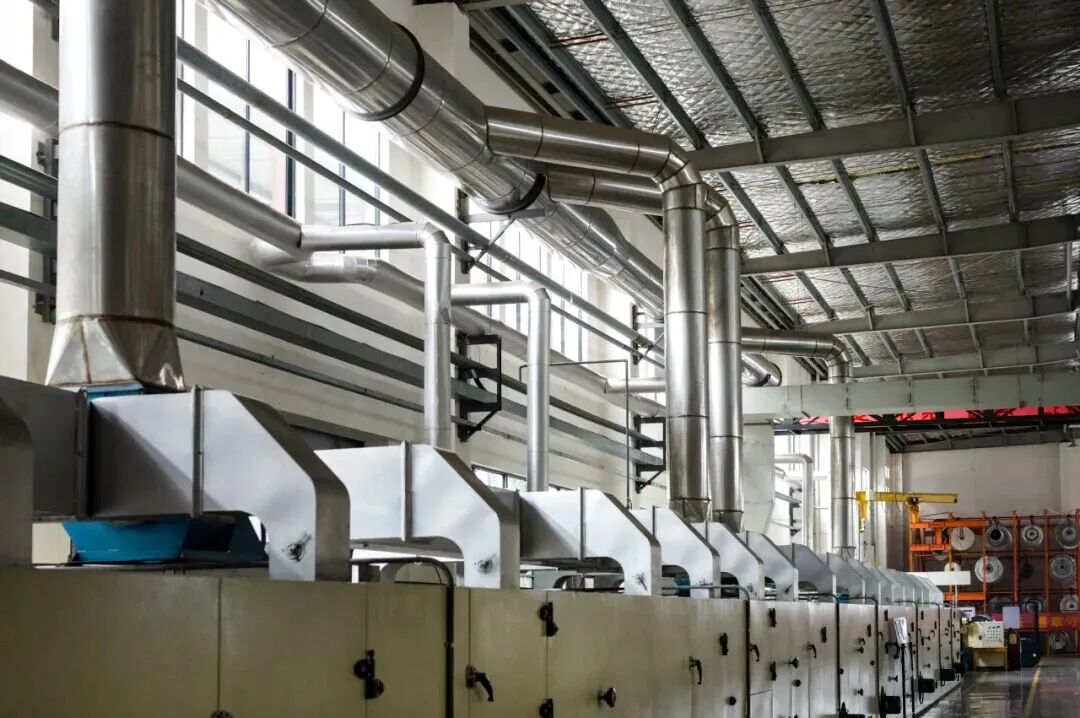
PURE® Changfeng’s all-waterborne production facility

Today,PURE® product line is committed to a 100% waterborne, solvent-free formulation, redefining “cleanliness” with three criteria:zero odour, zero added solvents, ultra-low VOC. It does not rely on fragrance masking or concept packaging; it reduces the burden on the material at the source.
This answer has also been validated by the market. PURE® products are supplied directly to international brands including IKEA, Ashley and GN. So “water as the source, rebuilding the future of materials” is not a slogan to dress up the brand; it isa road that has been walked all the way from 2007 to today—a structural rebuild of the material that swaps out solvents at the source, and an answer earned over years of work.
Some material and images in this article are sourced from the internet
please contact us for removal if anything is inappropriate
PURE®
Making Materials More Sustainable